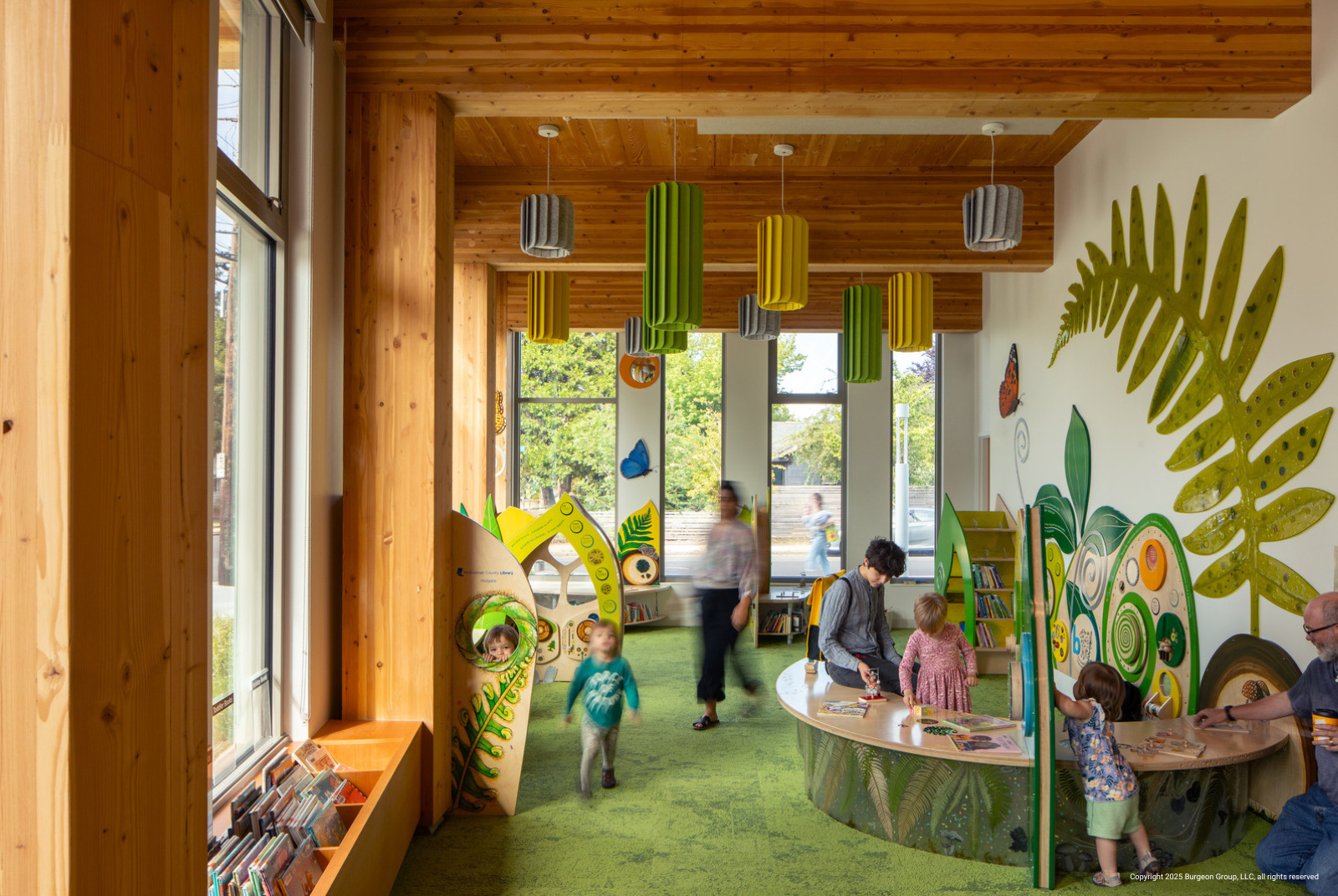
Committed to Carbon Reduction
Meaningful climate action is one of Bora’s core design goals. We minimize operational carbon emissions through highly efficient, all-electric buildings that deliver reliable thermal comfort to users. We also reduce embodied carbon through strategies including adaptive reuse, optimized concrete mixtures, and wood construction. Our practice has been shaped by our roots in the Pacific Northwest, where we enjoy a thriving timber industry. We experience firsthand how mass timber construction fosters a unique respect between rural and urban, bringing forestry communities and civic clients together around a shared interest.
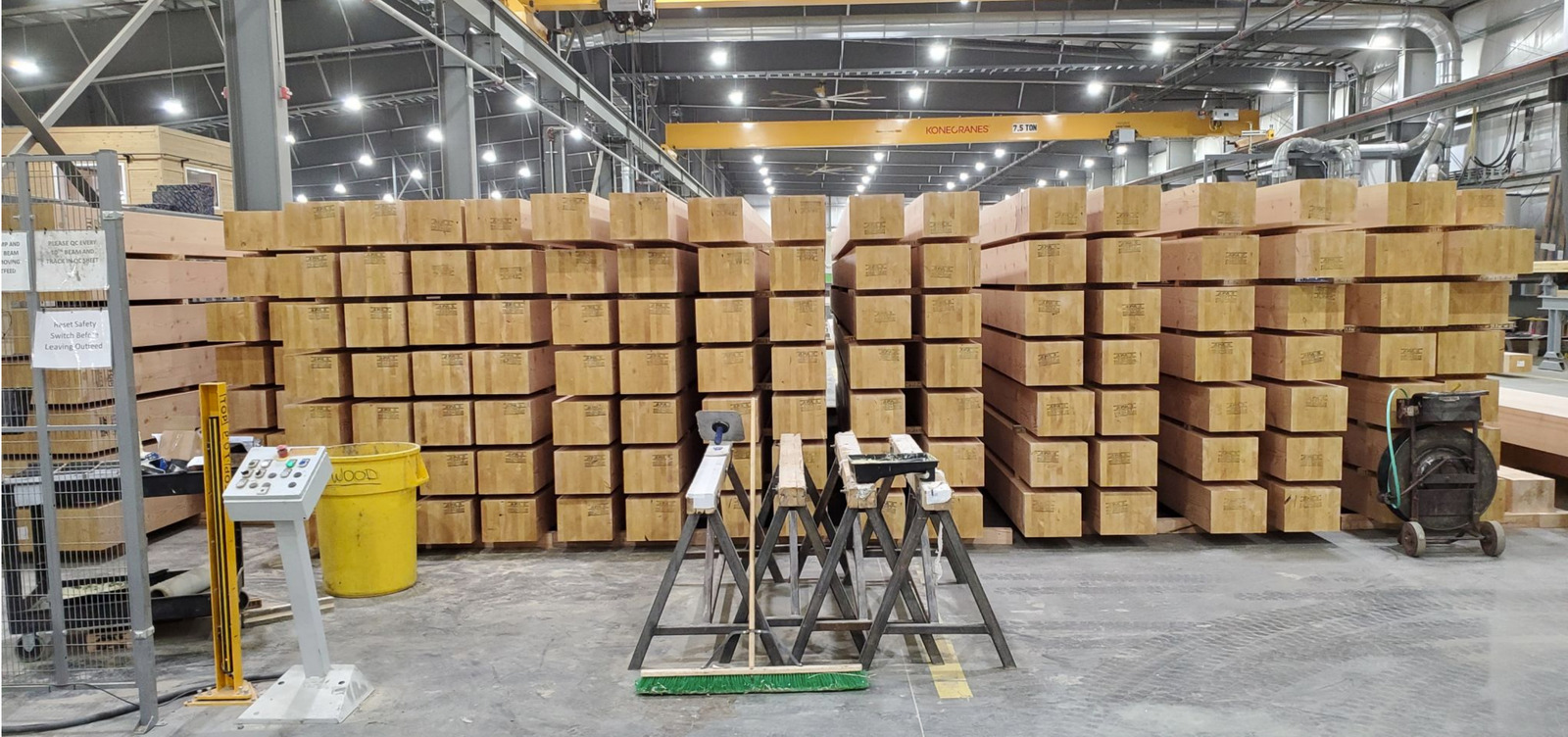
Studies have shown improved focus, comfort, and creativity when people are given a strong connection to nature. Mass timber’s color, warmth, grain, and beauty is a strong contributor to that connection. In short, mass timber makes better spaces for people. Mass timber projects allow us to connect the local economy, the global climate, and biophilia– people’s innate desire to connect to nature–within a singular design strategy.
The Right Kind of Mass Timber
Using a mass timber structure is only a sustainable design strategy if the lumber comes from sustainably managed forests. Prioritizing FSC certification whenever possible, we remain committed to the goals of Climate Smart Wood, a forest management approach that advances conservation and restoration of forest ecosystems, removes and stores more atmospheric carbon than conventional practices, and increases resilience in the face of climate change. We design for a mass timber structure on all our ground-up projects, aligning floor plates and column grid spacing with the natural qualities of wood. While not every building may end up being mass timber, we believe that every project with the potential to be wood should embrace its possibilities.
Mass Timber 101: A Podcast
In our six-episode podcast series, Bora Associate Principal Scott Barton-Smith and Studio Manager Sara Rae break down the basics of mass timber—exploring its definition, common types, and groundbreaking potential. They also dive into mass timber’s fire-resistant properties, cost considerations, and more.
Available on Spotify and Apple Podcasts
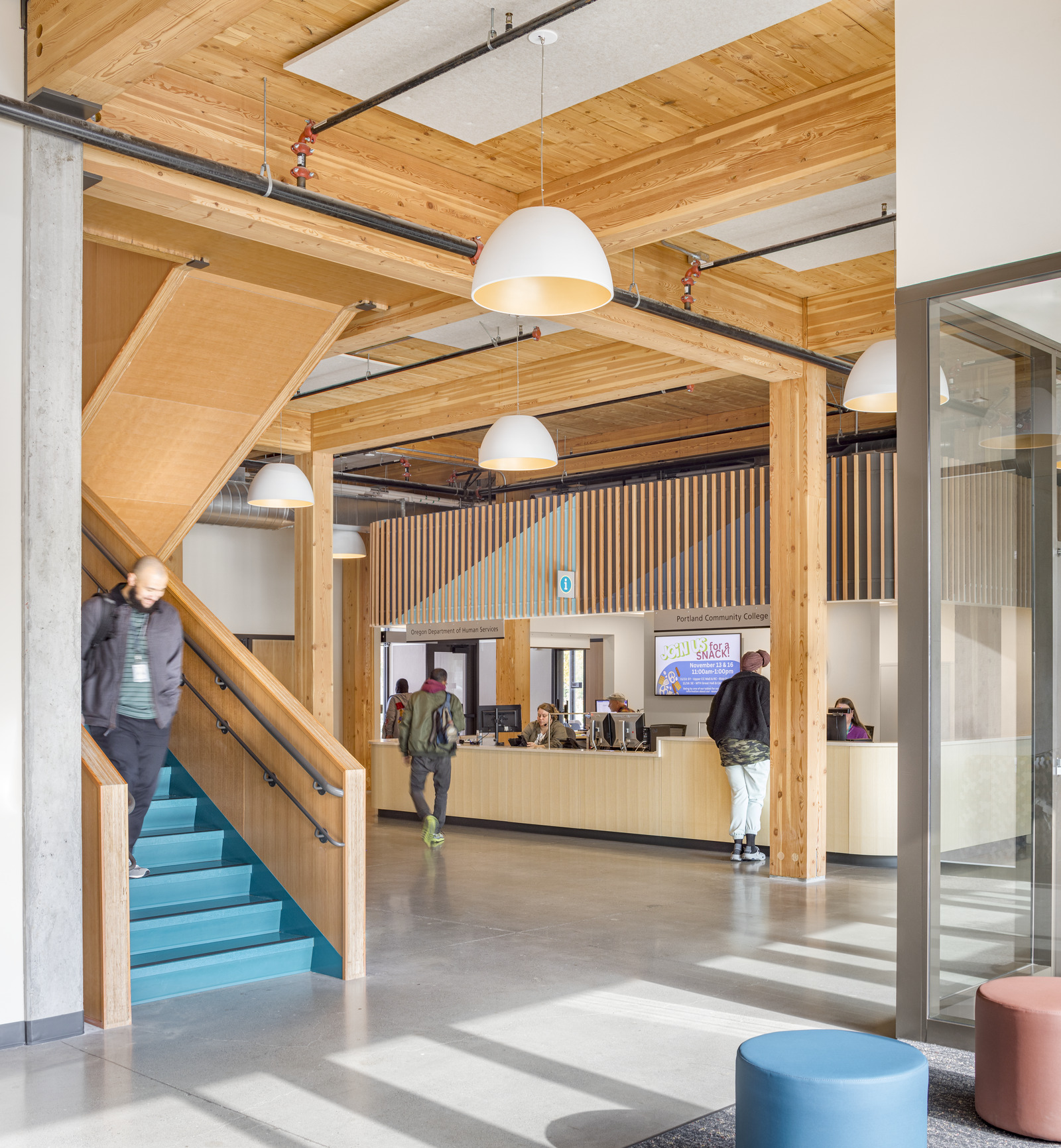
Mass Timber for K-12: A White Paper Series
Our experience with mass timber across numerous projects has afforded us a depth of expertise and lessons learned in this subject matter, particularly when it comes to designing for learning environments. We’ve written this practical, hands-on three-part series that addresses common questions and issues that have arisen as we navigate best practices around mass timber implementation.
PAPER 1 | Mass Timber in the Learning Environment
PAPER 2 | Caring for Mass Timber (It’s Not That Fragile)
PAPER 3 | Mass Timber Ceilings: Functional Beauty